
Is Knoxville a good place to retire?
Knoxville can suit a retiree who wants a lower starting budget, a serious regional medical center, and outdoor life close enough to shape ordinary weeks. The Urban Wilderness, the Tennessee River, city greenways, free museums, gardens, and a small but useful transit system give the city more range than its size suggests.
The tradeoff is practical rather than flashy. A car remains central to most daily life, winters bring freezing days, summer brings heat and humidity, and the terrain can matter after a long care visit or outdoor morning. Knoxville works best for someone who values room in the budget and is willing to choose the home around transport, hills, weather, and care.
What it may cost
Start with the local estimate. Traveler and couple budgets show how the monthly total can change.
Local monthly estimate
$2,956
- Traveler estimate
- $4,145
- Couple estimate
- $4,413
- Typical 1BR rent
- $996
- Cost pressure
- Good
Everyday life
Nearby air service can make family visits simpler. There is an established 50+ community.
30.4%
Residents age 50+
- Walkability
- Good2.9 / 5Some errands may work on foot; a car may still be useful.
- Median broadband
- 416 MbpsPlenty for video calls and streaming.
- Family visits
- Airport connected visit
Knoxville, in focus
A retirement shaped by lower costs, regional care, and four seasons
Knoxville gives outdoor life an address
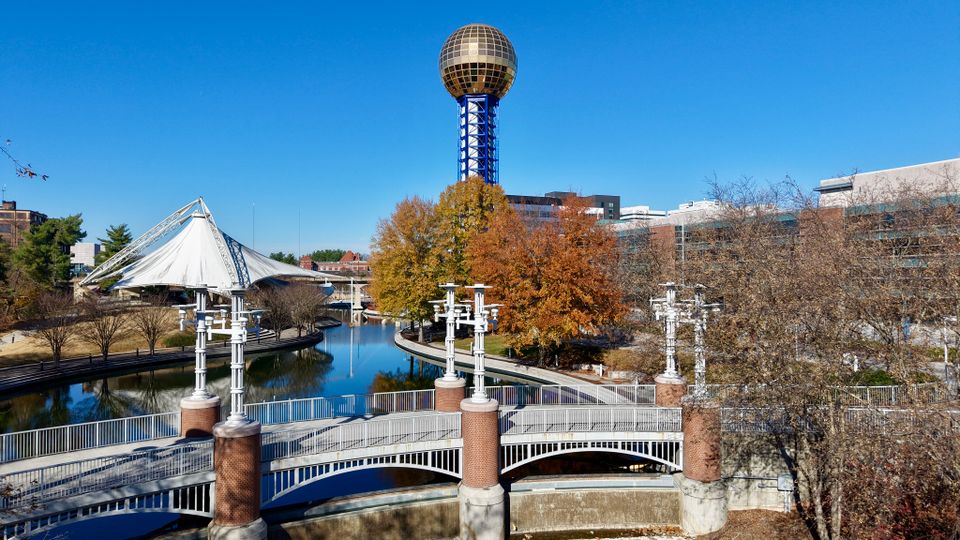
Knoxville's Urban Wilderness connects more than 50 miles of trails, parks, greenways, lakes, historic places, Tennessee River access, and wildlife areas. City Parks and Recreation adds parks, greenways, community centers, senior centers, arts programs, events, and outdoor recreation. The Knoxville Botanical Garden and Arboretum brings 44 acres of trails, display gardens, historic horticulture, and more than two miles of stone walls.
Outdoor variety is not the same as effortless daily mobility. A trail visit, a greenway near home, and a trip to a garden ask different things from the body, car, parking, and weather. Compare the address with the paths and places you would actually use, including the return after an appointment or a long morning outside.
A regional medical center gives the city reach
The University of Tennessee Medical Center is a 710 bed nonprofit academic medical center and tertiary referral center for East Tennessee. Its regional physician and urgent care network serves a 21 county area, and UT LIFESTAR adds aeromedical services for regional transport. That reach gives Knoxville a serious medical resource without making every service equally close to every home.
Knoxville has seven nearby major hospitals, 1,591 hospital beds within 12 kilometers, and 108 nearby pharmacies. Other local counts include 10 Medicare emergency hospitals within 30 miles, 17 nursing homes within 15 miles, 11 home health offices, 10 dialysis facilities, and 16 ambulatory surgical centers. Coverage, clinicians, appointment access, and the trip from the home still need confirmation.
Getting the care you need
Hospital access and everyday care both look strong.
7
Hospitals nearby
- Healthcare access
- Very Good
- Country life expectancy
- About 78.9 years
- Primary care
- Very Good
- Pharmacy access
- Very Good
Knoxville care is strongest when the regional center fits the weekly route
The nearest Medicare emergency hospital is 0.9 miles away, and the nearest CMS rated hospital is listed at three of five stars and 0.9 miles. Knoxville also has 10 Medicare emergency hospitals within 30 miles, 1,591 hospital beds within 12 kilometers, and seven nearby major hospitals. These distances and counts help organize the first questions, but they do not choose a doctor or guarantee an appointment.
The household still needs primary care, a preferred hospital, a pharmacy, specialists, transport, home support, and a plan for recovery. Local figures show 1.5 percent of residents age 65 and older without health insurance and 36.4 percent with a disability. The address should leave enough room for the weekly route as well as an urgent trip.
Understanding safety
Property crime looks better; violent crime is the part to examine more closely.
Overall safety
Good
3.0 / 5
- Violent crime
- Moderate
- Property crime
- Good
Knoxville safety includes weather, terrain, and the route home
The local hazard information marks natural disaster and flood risk as moderate, storm risk as high, and wildfire, heat, and drought risk as low. Knoxville has had 10 major disaster declarations since 2000. These categories call for practical questions about severe storms, rain, winter conditions, terrain, lighting, and home maintenance rather than a blanket conclusion about every block.
Knoxville's emergency preparedness program connects city and county partners with preparation resources. Before choosing a home, ask about drainage, trees, driveway slope, stairs, handrails, lighting, roof condition, heating, and the route home after heavy rain or winter weather. Crime rates should be read with their source year and scope, not used as a substitute for visiting the actual address.
Living through the seasons
Summers are the easier season. Winter comfort deserves a closer look.
Overall climate comfort
Good3.3 / 5
Summer
86°F
Average high
23 days/year above 90°F
4.1 / 5 · Very Good
Winter
33°F
Average low
66 days/year below freezing
2.9 / 5 · Good
Air quality
Excellent
4.7 / 5
Knoxville gives you seven comfortable months and a real winter
Knoxville's average summer high is 86°F, with about 23 days above 90°F. The average winter low is 33°F, with about 66 days below freezing. Seven months are listed as comfortable, April through October are the best months, and January, February, and December are the toughest. Outdoor life can cover much of the year, but it changes with the season.
Humidity is 76 percent, allergies are marked poor, and the modeled long term fine particle average is 6.7 micrograms per cubic meter for 2021 to 2025. The climate information is a planning guide rather than a promise about one home or one person's comfort. Heating, cooling, pollen, rain, lighting, and indoor alternatives all belong in the choice.
Retirement fit
Knoxville, strengths and tradeoffs
Care, costs, seasons, and local character can suit some retirees better than others.
Pros
- Lower published monthly estimates and a lower typical one bedroom rent than the Florida options in this batch give the budget a clearer starting point.
- The University of Tennessee Medical Center gives East Tennessee a major academic and tertiary care resource.
- Urban Wilderness, greenways, parks, gardens, libraries, and free art provide varied ways to spend time.
- Four seasons and a smaller regional setting may feel more grounded than a major coastal metro.
Tradeoffs
- A car is required for most daily life, and transit serves city limits and main corridors rather than every address.
- Winter brings about 66 freezing days, while summer still brings heat, humidity, and about 23 days above 90°F.
- Hills, terrain, stairs, and the final walk can matter as much as distance on a map.
- The lower budget does not remove the need to plan transport, heating, care, and home maintenance.
A few days in Knoxville
Spend time with ordinary parts of the city as well as its better known places.
Day 1
Visit in winter and summer
Spend time in a colder month and a hotter month when possible. Notice freezing conditions, hills, rain, heating, cooling, indoor comfort, and how much energy remains after errands or outdoor time.
Day 2
Map a care and errand week
Connect primary care, the University of Tennessee Medical Center or a preferred hospital, the pharmacy, groceries, KAT, parking, and the car routes you would repeat. Include the trip home after a longer appointment.
Day 3
Choose for the terrain, not just the rent
Compare hills, driveway, stairs, greenway access, winter and rain conditions, hospital routes, home maintenance, heating, and the trip to McGhee Tyson Airport before choosing the lower monthly address.
Questions worth asking before you retire in Knoxville
Is Knoxville a good place to retire?
Knoxville can fit someone who values lower published costs, the University of Tennessee Medical Center, parks, gardens, museums, and four seasons. A required car, hills, freezing days, summer heat, and the route from home still deserve equal attention.
How much does it cost to retire in Knoxville?
The published planning figures show $2,956 for the minimum needed, $4,145 for comfortable living, $4,413 for a couple, and $996 for typical one bedroom rent. They are planning estimates, not a promise for a particular household or home.
Is healthcare good in Knoxville?
Knoxville has seven nearby major hospitals and the 710 bed University of Tennessee Medical Center, a tertiary referral center for East Tennessee. Confirm coverage, clinicians, appointment access, prescriptions, and the route from the address you are considering.
Do I need a car in Knoxville?
Car ownership is listed as required. Knoxville Area Transit offers fixed route buses and paratransit, but hills, care, groceries, weather, parking, and the location of the home determine how much a household can manage with transit alone.
What is winter like in Knoxville?
The average winter low is 33°F, with about 66 days below freezing. That makes heating, driveway slope, stairs, lighting, winter route planning, and indoor alternatives part of choosing a home.
Could this place work for you?
Knoxville may suit a retiree who wants room in the budget, regional medical depth, outdoor variety, and four seasons, and who accepts that a car, terrain, winter, and home maintenance will shape the week. Compare the actual home and routes, then use Save, Compare, or Find my fit.
Sources
These sources list the public figures used for Knoxville. Local context links describe its parks, food, culture, history, and other place specific details.
- U.S. Census Bureau; U.S. Bureau of Labor Statistics
Used for Estimated Monthly Budget (Traveler), Estimated Monthly Budget (Local Resident), Estimated Monthly Budget (Couple), Cost Pressure
- U.S. Census Bureau
Used for Typical 1BR Rent
- OpenStreetMap healthcare amenities static probe
Used for Healthcare Access, Primary Care Access
- FEMA RAPT / HIFLD Hospitals
Used for Hospitals Within 12 km
- Centers for Medicare & Medicaid Services NPPES NPI Registry
Used for Pharmacy Convenience
Checked 2026-07-19
- FBI Crime Data Explorer
Used for Violent Crime Level, Property Crime Level
Checked 2024-12-31
- NOAA/NASA source-backed climate component formula
Used for Climate Comfort, Summer Heat, Winter Comfort
- Open-Meteo / Copernicus CAMS, checked against U.S. EPA AirData
Used for Air Quality
Checked 2026-05-18
- U.S. Environmental Protection Agency National Walkability Index
Used for Walkability Estimate
Checked 2026-07-10
- U.S. Census Bureau
Used for Age 50+
- Centers for Medicare & Medicaid Services (CMS)
Used for Medicare-Listed Geriatric Medicine Clinicians in City, Medicare-Listed Cardiology Clinicians in City, Medicare-Listed Medical Oncology Clinicians in City, Medicare-Listed Neurology Clinicians in City, Medicare-Listed Ophthalmology Clinicians in City, Medicare-Listed Endocrinology Clinicians in City, Medicare-Listed Pulmonary Disease Clinicians in City, Medicare-Listed Nephrology Clinicians in City, Medicare-Listed Rheumatology Clinicians in City
Checked 2026-07-13
Partnerships never affect rankings, scores, methodology, or inclusion.
Partner with Retirement ListsResearch and writing byGrant Gibson
How this city research is made
Retirement Lists uses documented public sources and methods to research, review, and correct city information. Read our Editorial Policy.